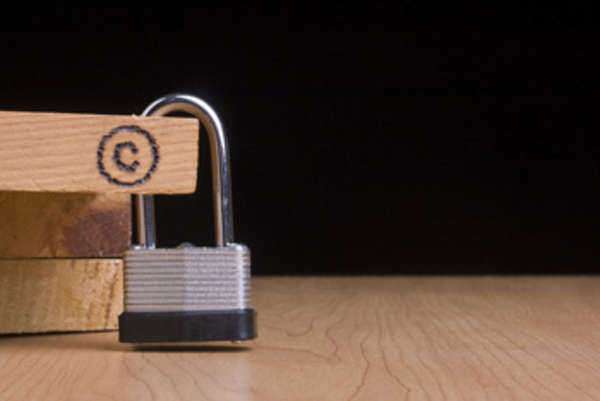
Discover the Problems with Copyright Infringement
📅 2026 Update: Key Changes in Copyright Infringement
Since the original article was published, there have been several important updates in copyright law and enforcement. The landscape of copyright infringement continues to evolve, especially with the rise of digital piracy and the implications of artificial intelligence on copyright issues. The earlier article below still provides valuable insights into copyright concepts, but the following updates highlight significant changes from 2024 to 2026.
🛡️ Recent Enforcement Actions
In January 2026, the U.S. Trade Representative confirmed enforcement actions against piracy sites. This includes the shutdown of sites like Fmovies in 2024 and Y2Mate in 2025, along with Xoilac TV and R*phim in 2026.
These actions show a concerted effort to combat online piracy.
📅 Changes in Public Domain
As of January 1, 2026, works first published in 1930 and sound recordings from 1925 have entered the public domain. This means they can now be used freely without permission. This shift expands the range of materials available for use in research, teaching, and creative projects.
⚖️ Supreme Court Ruling on AI
In March 2026, the Supreme Court declined to hear the case Thaler v. Perlmutter. This decision confirmed that content created solely by artificial intelligence cannot receive copyright protection.
This has implications for creators and businesses using AI-generated content.
⚠️ Criminal Penalties for Infringement
Criminal penalties for significant piracy have become stricter. For willful copyright infringement, statutory damages can reach up to $150,000 per work. Large-scale piracy can lead to criminal convictions and up to ten years in federal prison.
📋 DMCA Takedown Process
The DMCA remains a key tool for copyright holders. Service providers must respond promptly to valid DMCA takedown notices, usually within a few business days. This requirement helps speed up the process of removing infringing content.
📌 Key Points Summary
- 🛡️ Enforcement actions against piracy sites are ongoing.
- 📅 Public domain now includes works published in 1930 and recordings from 1925.
- ⚖️ AI-generated content is not copyrightable, as per the Supreme Court.
- ⚠️ Statutory damages for infringement can go up to $150,000 per work.
- 📋 DMCA takedowns require quick responses from service providers.
💡 Tips for Understanding Copyright Infringement
Reviewing your specific situation with an attorney can provide clarity on copyright issues.
📚 Understand Fair Use
The fair use doctrine allows limited use of copyrighted material without permission for purposes such as criticism, teaching, and research. Familiarizing yourself with fair use can help navigate copyright concerns.
🔒 Know Your Rights
As a creator, it's important to know your rights regarding your work. Copyright protects original works and can provide legal avenues against unauthorized use.
📄 Use DMCA Takedown Notices
If you find your work being used without permission, consider sending a DMCA takedown notice. This process allows you to request the removal of infringing content from websites.
📅 Track Statutory Damages
Statutory damages can be substantial, reaching up to $150,000 per work for willful infringement. Understanding these potential penalties can inform your approach to copyright enforcement.
📖 Check Public Domain Resources
Works published before 1925 are in the public domain and can be used freely. Utilize these resources for projects without worrying about copyright.
🔍 Review Recent Court Cases
Stay informed about recent court decisions related to copyright issues. These rulings can impact how copyright law is interpreted and enforced.
🏆 Free Options Ranked by User Reviews (2026)
No national paid services reached the review threshold for this topic. Instead, this section highlights free government and nonprofit resources that can assist with copyright issues.
🥇 1. U.S. Copyright Office
The U.S. Copyright Office offers valuable resources for understanding copyright laws. They provide guidance on fair use and the DMCA, helping creators navigate the complexities of copyright.
🥈 2. Creative Commons
Creative Commons provides free licenses that allow creators to grant specific usage rights to the public. This service helps individuals share their work while maintaining certain rights.
🥉 3. Public Domain Review
The Public Domain Review showcases works that are now free to use. This resource helps individuals discover and utilize public domain materials in various projects.
4️⃣ National Archives
The National Archives offer access to a wealth of public domain materials, including historical documents and records. This resource is great for educators, researchers, and anyone interested in history.
5️⃣ Library of Congress
The Library of Congress provides extensive materials that include many works in the public domain. This resource is useful for researchers and creators looking for inspiration or reference materials.
🔎 What to Check Before Paying for Help
- 📜 Understand the service fees and what they cover.
- 🔍 Look for customer reviews and testimonials.
- ⚖️ Check if the service complies with copyright laws.
- 📞 Ensure you can contact them for support if needed.
❓ Frequently Asked Questions
❓ What is the fair use doctrine?
The fair use doctrine allows limited use of copyrighted material without permission. It applies to criticism, commentary, news reporting, teaching, scholarship, and research.
📜 How can I protect my original work?
Registering your work with the U.S. Copyright Office can provide legal protection. This registration is not mandatory but strengthens your position in case of infringement.
🚫 What penalties do copyright infringers face?
Willful copyright infringement can lead to statutory damages up to $150,000 per work. Additionally, criminal convictions for large-scale piracy can result in up to ten years in federal prison.
📅 How quickly must service providers respond to DMCA notices?
Service providers are required to act expeditiously upon receiving a valid DMCA takedown notice. Typically, this response should happen within a few business days.
💻 Can AI-generated content be copyrighted?
No, a recent Supreme Court ruling confirmed that purely AI-generated content is not eligible for copyright protection. This means that creators cannot claim copyright over such work.
🌐 Where can I find public domain works?
Works published before 1925 are in the public domain and can be freely used. Resources like the U.S. Copyright Office and the Library of Congress can help you locate these materials.
⚖️ Recent Cases in Copyright Law
Recent court rulings have clarified important aspects of copyright law. These rulings connect to ongoing discussions about copyright infringement, particularly in the context of digital content and AI.
- Court upholds dismissal of copyright case against KoonsCourt of Appeals for the Second Circuit · July 21, 2026
- Court affirms trademark ruling in Deltona v. NOCO caseCourt of Appeals for the Eleventh Circuit · August 4, 2026
- Court rules in favor of VIP Products in trademark caseCourt of Appeals for the Ninth Circuit · August 4, 2026
- Court Affirms Judgment in Nelson v. MillerKnoll Trademark CaseCourt of Appeals for the Sixth Circuit · July 7, 2026
For more recent rulings, check out more rulings on the news page.
End of October 2026 Update
Online file sharing has led to many problems
with copyright infringement. While online file sharing
software may be legal, the software is capable of performing illegal activities
such as copyright infringement. Documents created by a user that are shared
with another user, or peer, is a perfectly legal procedure. Problems arise when
files that are shared include copyrighted material such as songs, software and
movies. Companies and individuals who produce creative content claim that
illegal file sharing costs them possibly billions of dollars every year when
added together.
The public has gotten
comfortable with illegal file sharing as a normal practice. The ease in which
what some would call expensive material could be obtained helped make illegal
file sharing accepted. People do not think of sharing copyrighted material as
stealing in the same way they think about walking into a store and running out
the door after grabbing a CD they have been waiting to hear.
The perception many people share regarding
sharing copyrighted material online is that it is online and can be downloaded
with one click, therefore it must be free. Since there is no physical store
involved to steal from, it may not seem like stealing. However, people who
download copyrighted material through online file sharing software are stealing
from artists, record companies, film companies, software producers, and any
other organization that makes a living off selling copyrighted material to the
public.
Record companies and movie
companies wish they could claim those who illegally download files are not
receiving quality equal to that of a CD or DVD. Unfortunately for those
companies, many of the files located on file sharing software are close if not
equal to the quality included on a disc if it is purchased legally.
Some people who download music
or movies claim they cannot afford to pay full price for media. Companies do
not believe this is a valid statement at all. To them, illegal file sharing is
a crime that is being ignored by too many people including the government. The
Recording Industry Association of America has begun suing individual people who
provide copyrighted material to be downloaded from their computer. While this
may stop a handful of people who are directly contacted by the RIAA, the majority
of people will continue to download illegally.
Since file sharing has exploded
in popularity, the music industry has shown large drops in album sales. Many
public people claim it is due to a lack of musical talent while musicians and
music companies fear illegal file sharing is going to wipe out all record
companies aside from the major labels. There have also been reported drops in
employment related to the closing of many CD stores. If millions of people are
downloading content illegally, and millions more are downloading content
legally, not many people are left to purchase music and movies from outlet
stores that sell actual CD's inside.
However, recent studies have shown that with
the growth of the digital music industry, drops in album sales do not
necessarily indicate a drop in revenue. With now almost half of all revenue
generated from music coming from digital downloads of singles and records, many
are beginning to question the impact of copyright infringement on the revenue
of the music industry.
A major problem unrelated to
online file sharing and the entertainment business is the danger of peer-to-peer
sharing. When peer-to-peer sharing takes place there is an increased chance a
user's computer will become infected with spam and
spyware. Computer hackers who use viruses to infect
people's computers and gain access to information and files often take
advantage of peer-to-peer users due to the ease in which a virus can be
disguised and used to harm someone's computer.