Facts to Be Aware of Regarding Internet Copyright Infringement
📅 2026 Update: Key Changes in Internet Copyright Laws
Since the original article was written, there have been several important updates regarding internet copyright laws. These changes include actions against piracy sites and clarifications on copyright eligibility for AI-generated content. The information outlined in the earlier article remains relevant and can be found further down the page.
🔍 Major Enforcement Actions
The U.S. Trade Representative (USTR) has taken significant steps to combat piracy. In January 2026, they acknowledged enforcement actions against various piracy sites.
This includes sites like Fmovies in 2024 and Y2Mate in 2025. In 2026, platforms such as Xoilac TV and R*phim faced similar actions. These efforts aim to protect copyright holders and reduce illegal content distribution.
⚖️ Supreme Court Ruling on AI
In March 2026, the Supreme Court declined to hear the case Thaler v. Perlmutter. This decision confirmed that purely AI-generated content cannot be copyrighted.
This ruling impacts how creators and companies approach the use of AI in generating works. Understanding this distinction is crucial for those involved in digital content creation.
📄 New Public Domain Works
As of January 1, 2026, new works have entered the public domain. Works first published in 1930 and sound recordings from 1925 can now be used freely. This expansion of public domain content allows for greater access to historical works without copyright restrictions.
📧 DMCA Takedown Process Updates
The Digital Millennium Copyright Act (DMCA) remains vital in handling copyright infringement. Service providers are required to respond quickly to DMCA takedown notices, usually within a few business days. This process is designed to help copyright holders remove infringing content efficiently.
📌 Summary of Key Changes
- 🔒 USTR has shut down multiple piracy sites from 2024 to 2026.
- 🏛️ AI-generated content is not eligible for copyright protection.
- 📜 New public domain works are available from 1930 and 1925.
- 📬 DMCA takedown responses must occur within a few business days.
- ⚖️ Enforcement actions are ongoing to protect copyright holders.
💡 Practical Tips for Copyright Awareness
Reviewing your specific situation with an attorney can help clarify your rights and responsibilities under copyright law.
📚 Understand Fair Use
The fair use doctrine allows limited use of copyrighted material without permission. This applies to purposes like criticism, commentary, teaching, and research. It’s important to know what qualifies as fair use to avoid infringement.
📅 Keep Records
Document your creative process and ownership of your works. This can help you prove your claims if disputes arise. Keeping clear records is essential for protecting your rights.
📜 Monitor Your Work
Regularly check where your content appears online. Use tools to track unauthorized use of your work. This proactive approach can help you address infringement quickly.
🚫 Know the Limits of Public Domain
Works published before 1925 are in the public domain and can be freely used. However, be aware that not all older works are free to use, as some may still have active copyrights.
📧 Use DMCA Takedown Notices
If you find infringing content, you can file a DMCA takedown notice. Ensure you include all necessary information in your request to expedite the process.
🚨 Be Aware of Criminal Penalties
Willful copyright infringement can lead to severe penalties. Fines can reach up to $150,000 per work, and criminal convictions may result in up to ten years in prison. Understanding these risks can help you navigate copyright law more safely.
🏆 Free Options Ranked by User Reviews (2026)
Currently, no national paid services met the review threshold for this topic. Instead, here are free government and nonprofit resources to help you understand copyright laws and protect your works.
🥇 1. U.S. Copyright Office
The U.S. Copyright Office offers a wealth of resources and guidance on copyright laws. They provide information on fair use, registration, and the DMCA.
This is an essential resource for creators seeking to understand their rights.
🥈 2. Creative Commons
Creative Commons provides free licenses that allow creators to grant specific usage rights to the public. These licenses help clarify how others can use your work, promoting sharing while protecting your rights.
🥉 3. National Endowment for the Arts
The National Endowment for the Arts supports various programs that promote the arts. They provide resources and grants for artists, helping to raise awareness of copyright issues within creative communities.
4️⃣ National Archives
The National Archives preserves important documents and works that are part of the public domain. They offer access to historical works, which can be used freely by the public and serve as educational resources.
5️⃣ Library of Congress
The Library of Congress offers extensive collections and information on copyright laws. They provide access to resources that help individuals and organizations understand historical and current copyright issues.
🔎 Key Considerations Before Paying for Help
- 📜 Verify credentials and expertise in copyright law.
- 🔍 Check for user reviews and feedback on services.
- 📅 Understand what services are included in the fees.
- ⚖️ Confirm the legal background of the provider.
- 💬 Look for free alternatives before committing to payment.
❓ Frequently Asked Questions
❓ What is copyright infringement?
Copyright infringement occurs when someone uses a copyrighted work without permission. This can include copying, distributing, or publicly displaying the work without authorization.
⚖️ What are statutory damages?
Statutory damages are predetermined amounts that a copyright holder can claim for infringement. For willful infringement, damages can reach up to $150,000 per work.
🌐 How do I file a DMCA takedown notice?
To file a DMCA takedown notice, you must submit a notice to the service provider. This notice needs to include specific information about the infringing content and your ownership rights.
💼 What are the penalties for copyright infringement?
Penalties for copyright infringement can include fines and imprisonment. For large-scale piracy, criminal penalties can lead to up to ten years in federal prison.
📅 How long does it take to process a DMCA takedown notice?
Service providers are required to act quickly upon receiving a valid DMCA takedown notice. Typically, they must respond within a few business days.
📚 What is the fair use doctrine?
The fair use doctrine allows limited use of copyrighted material without permission. This includes uses for criticism, commentary, teaching, and research.
⚖️ Recent Cases Related to Copyright
Several recent court rulings have clarified aspects of copyright law, particularly regarding AI-generated content and the enforcement of copyrights. These cases reflect ongoing developments in internet copyright issues.
- Florida court affirms ruling in alcohol licensing disputeDistrict Court of Appeal of Florida · May 19, 2021
- Florida court affirms ruling in doctor’s licensing disputeDistrict Court of Appeal of Florida · October 21, 2021
- Federal Circuit affirms patent validity in Google caseCourt of Appeals for the Federal Circuit · October 19, 2026
- Court affirms ruling against Sean C. Roberts in licensing caseDistrict Court of Appeal of Florida · March 18, 2021
For more recent rulings, you can browse more rulings on the news page.
End of October 2026 Update
Copyright
infringement happens when one party uses, sells, distributes, or recreates
another person's work of authorship without the original owner's consent. Copyright infringement can happen in a variety of ways, through many mediums, including
motion pictures, photographs, paintings, musical recordings, and literary
works.
With
the emergence of the internet, copyright infringement laws began to expand in an
effort to adapt laws to meet the growth of technology. The internet is a tool
that allows the easy retrieval of information instantaneously. This makes it
easy for information to spread quickly, though much of this information can be
copyrighted. To prevent this from happening, new intellectual property laws
have been established to protect creative works that are being spread without
consent quickly and easily over the internet.
Internet Copyright Infringement for Works on Websites
Websites are a great tool to help spread
information and show off creative works to millions of people quickly and
easily. Many people show off artwork, photography and writing on various
websites and blogs. If a person owns his or her own website, the information
that is placed on it is generally protected under current copyright laws.
Since
information flows quickly across the internet and there is such a vast amount
of it, it is quite often difficult to tell if when a person passes off creative
work as his or her own when it is not. When displaying copyrighted work,
authors are told to take extreme caution.
One way to prevent this from happening is to have
photographs watermarked with a ©. There are
also ways to digitally sign content so that the source of it is easily
determined if an internet copyright infringement case goes to court. Overall,
it is important for authors to understand that although the internet is a
useful tool for showing work, anything put on it is subject to copyright
infringement. Authors should always use caution.
Internet Copyright Infringement on Musical Works
As technology advanced further, programmers were
able to find a way to compress high quality audio into small files. Also, with
the emergence of the internet came the ease of file sharing. It was not long
before copyrighted musical work began to spread quickly throughout the internet
without artists receiving royalties.
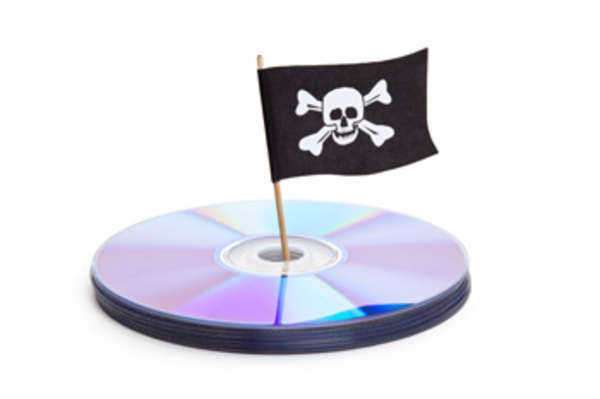
This internet copyright infringement
became a major dispute with record companies and individuals that stole music
from internet servers across the world. New guidelines and procedures were put
in place to protect intellectual property, though it is still a major concern
today due to the evolving nature of the internet.