3 Basic Questions Answered About Copyright Registration
📅 2026 Update: Changes in Copyright Registration
Since the original article was published, several key updates have occurred in copyright registration practices. These changes focus on new group registration options and amendments that affect how artists and news publishers can register their works. The earlier article continues further down the page, providing foundational information about copyright registration.
🎨 New Group Registration for Artwork
On December 19, 2025, the U.S. Copyright Office introduced the Group Registration for Two-Dimensional Artwork (GR2D). This option allows artists to register between two and twenty published two-dimensional artworks with a single filing fee.
All works must be published within the same calendar year. The GR2D application became available on February 17, 2026.
📰 Updates to News Website Registration
In May 2026, the Copyright Office proposed an amendment to the Group Registration of Updates to a News Website (GRNW). This amendment clarifies what constitutes a "news website." It now includes sites that report on various subjects, focus on current events, and frequently update their content. The final rule was published on August 13, 2026, and it took effect immediately.
💰 Current Fees for Registration
The costs for registering works have also been updated. The fee for electronic filing of a single work is now $45. For group registrations like GR2D, the fee is set at $85.
The Group Registration of Updates to a News Website (GRNW) costs $95. These updated fees reflect changes aimed at making the registration process more accessible.
⏳ Processing Times
The current processing times for copyright registrations vary. As of April 1, 2026, these times depend on the complexity of the application and the volume of submissions received. For more detailed information, users can refer to the processing times FAQ on the Copyright Office website.
📌 Key Updates Summary
- 🎨 GR2D allows group registration of 2 to 20 artworks.
- 📰 GRNW now covers more types of news websites.
- 💰 New fees: $45 for single works, $85 for GR2D, and $95 for GRNW.
- ⏳ Processing times vary based on application factors.
- 📂 More resources are available at the U.S. Copyright Office.
💡 Tips for Successful Copyright Registration
It's important to review your specific situation with an attorney before proceeding with copyright registration.
📝 Understand Group Registration
If you are an artist with multiple two-dimensional works, consider using the GR2D option. This can save you time and money by allowing you to register several works with one application.
💻 Use Online Registration
The preferred method for registering copyrights is through the electronic Copyright Office (eCO). This method is quicker and more efficient than paper filing.
📄 Know the Requirements
To register a work, you must submit a completed application form, a nonreturnable copy of the work, and the appropriate fee. Ensure you meet all requirements to avoid delays.
⏰ Be Aware of Deadlines
If you preregister a work, remember to register it within one month of learning about any infringement. Failing to do so may affect your ability to take legal action.
📚 Utilize Free Resources
Take advantage of the free resources provided by the U.S. Copyright Office. They offer toolkits and FAQs to help you navigate the registration process effectively.
🏆 Copyright Registration Services Ranked by User Reviews (2026)
This section provides a look at services related to copyright registration based on user reviews. The order reflects Trustpilot data as of October 2026, but scores can change. Star ratings are just one indicator, as unhappy customers tend to post more reviews, and samples may vary.
🥇 1. LegalZoom
LegalZoom has been rated 4.6. It is known for its business formation services and intellectual property registration. Reviewers mention a wide range of services, but some users report delays and communication issues, which can be an important factor to consider.
🆓 Free Government and Nonprofit Help
The U.S. Copyright Office offers various free resources. These include guides to help you understand copyright registration, toolkits for navigating the system, and access to public records.
These resources can be beneficial for individuals and businesses looking to register their works without incurring fees.
🔎 What to Compare When Choosing a Service
- 📈 Customer ratings and reviews.
- 💵 Cost of registration services.
- 🔍 Range of services offered.
- ⏳ Processing times for applications.
- 📞 Quality of customer support.
❓ Frequently Asked Questions
❓ What is the GR2D registration option?
The Group Registration for Two-Dimensional Artwork (GR2D) allows artists to register between two and twenty published artworks with one fee. This registration became available on February 17, 2026.
📅 How do I know if my news website qualifies for GRNW?
To qualify for Group Registration of Updates to a News Website (GRNW), your site must report on various subjects, have a primary focus on current events, and update content frequently. The definition was clarified in an amendment effective August 13, 2026.
💵 What are the current registration fees?
As of 2026, the fees are $45 for electronic filing of a single work, $125 for a standard paper application, $85 for GR2D, and $95 for GRNW.
⏳ How long does it take to process a registration?
Processing times vary based on the complexity of the application and the number of submissions. For the most accurate estimates, check the Copyright Office's processing times FAQ.
📄 What happens if I miss the preregistration deadline?
If you miss the preregistration deadline, you must register the work within one month of learning about infringement. If you do not register within three months after first publication, you may lose certain legal protections.
📚 Are there free resources for copyright registration?
Yes, the U.S. Copyright Office provides free resources, including FAQs, circulars, and toolkits to assist with the registration process. These tools can help you better understand your rights and obligations.
⚖️ Recent Cases Related to Copyright Registration
Recent court rulings have clarified various aspects of copyright registration and infringement. These rulings help define how copyright laws apply to different types of works and registrations.
- Court Affirms Judgment in Nelson v. MillerKnoll Trademark CaseCourt of Appeals for the Sixth Circuit · July 7, 2026
- Court rules on licensing dispute involving Tri-County RespiteCommonwealth Court of Pennsylvania · August 3, 2026
- Court Reverses Trademark Ruling in Cheerleading DisputeCourt of Appeals for the Eleventh Circuit · June 24, 2026
- Alabama court rules on Trulieve cannabis licensing disputeCourt of Civil Appeals of Alabama · July 10, 2026
For more recent rulings, you can browse more rulings on the news page.
End of October 2026 Update
Copyright
registration is the process by which an official record is produced for the
purpose of being able to verify a copyrighted work. Copyright registration,
therefore, becomes an integral process of obtaining and securing a copyright
and becomes the key factor in the protection of the copyrighted work, as well
as the copyright owner.
Copyright
registration also provides for the validity or verification in the case of
illegal infringement and any subsequent legal claims or cases that might arise
out the dispute of copyright ownership. Copyright registration can, as a
result, produce an original copy of the work from the Government to prove
validity in cases of dispute and verification purposes.
Is Copyright Registration Required?
Copyright registration is not required, as it is
granted as an international right under the provisions of the Berne Convention
of 1886. However, it is strongly suggested to register a copyrighted work for
further protection of the material, as well as the copyright owner in terms of
possible legal disputes or situations that may arise. A copyright, therefore,
actually exists whether or not it is properly registered under United States
legislation or law.
On the
international plane, the United States did not enter the Berne Convention until
1989. Thus it maintained its original process for copyright registration as
allowed by Federal law. The U.S. must consider all works of international
origins as if they have already undergone the copyright registration process in
the United States.
Where can a work be registered in the United
States?
The United States Copyright office is the Government's
institution that accepts the applications for registering a particular work.
Though it is not required for any type of work or material to be registered in
the United States to be recognized and protected as such, it is strongly
recommended that a copyright owner do so for verification purposes.
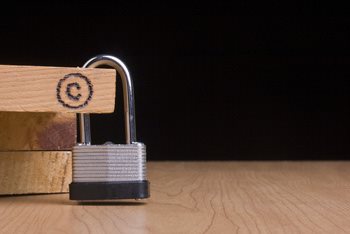
In order for
copyright infringement suits to be filed under United States law, copyright
registration is required in order to continue in the proceedings. All copyright
infringement cases are subject to the work being registered prior to the date
of the suit, or at least three months from the date of publication.
An important
advantage to copyright registration is that in the case of infringement lawsuits,
the registration of a copyright work establishes prima facie evidence if the
registration process was completed and a certificate of the registration
process was bestowed within five years from the date of the first publication
of the work or material in question.
Where are Copyright Registrations found in the
United States?
Finding copyright registrations has been made
fairly easy and convenient by the United States Copyright Office. All copyright
registrations and their subsequent renewals that have been registered from 1978
and onward can be found at the Copyright Office’s official website. Those
copyright registrations and renewals prior to that year are published Copyright
Catalogs, that are made available on a semi-annual basis. However, films that
were made between the years 1894 and 1969 have the copyright registrations made
available in the Cumulative Copyright Catalogs volumes, which are separated and
categorized in terms of decade. This publication is made available by the
United States Library of Congress.